
How Screen Time Affects Lesson Quality
Is an hour or more of online lessons really worth it? Read on to find out.
FOR PARENTS
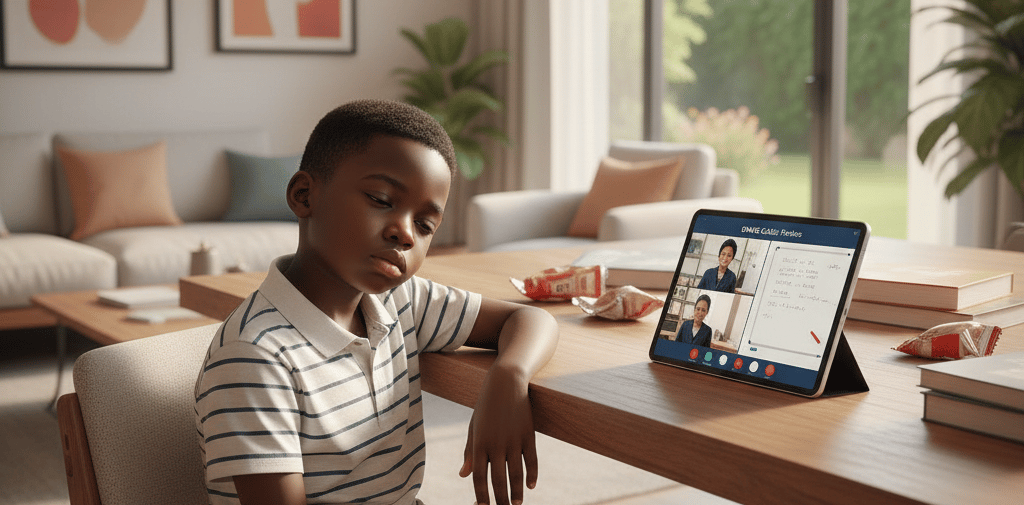
As Nigerian parents, whether we are at home or we are abroad, we all want the best for our children (as all parents do, of course). And in our quest to give them a "head start," many of us have signed them up for intense online tutoring sessions.
However, here is a hard truth supported by modern education experts: making a child sit for an hour or more in front of a screen for a lesson is often a waste of time and money.
While it feels like more hours equals more learning, the reality is that after the first 20 minutes, most children start to experience diminishing returns. This is the same reason why eating 3 plates of food at once is wasteful compared to eating a half of a plate of food six times.
Let's now visit three reasons that should make us rethink our choices in this area:
1. The 20-Minute Wall
Research shows that a young child’s concentration starts to drop significantly after just 15 to 30 minutes. When a lesson stretches to an hour, you are paying for 20 minutes of actual learning and 40 minutes of daydreaming, fidgeting, or battling "Zoom fatigue". This leads to the next point:
2. "Zoom Fatigue" is Real
Online learning requires much more cognitive effort than sitting in a physical classroom. But why is that? This is because in person, children pick up on body language and social cues naturally. Online, they must work twice as hard to process the same information through a small screen, leading to physical exhaustion and burnout. For our children abroad, this is often worsened by the pressure of keeping up with different curriculum standards.
3. Health and Posture Risks
Sitting still in one posture for anywhere close to an hour leads to backaches, neck strain, and "Digital Eye Strain". Many households don't have ergonomic chairs for kids, meaning children are often hunched over tables or sitting on beds, which can lead to long-term posture problems.
Alarmed? If you already rethinking online classes, do not fret, for here are some better alternatives for your child, based on how learning actually works:
The 4:1 Rule: Use the "Pomodoro" style—20 minutes of intense focus followed by a 5-minute physical stretch break away from the screen.
Micro-Learning: Break subjects into small, 20-30 minute "sprints." Remember the earlier illustration about food? Your child will retain more from three 30-minute sessions across a week than one 90-minute session on Saturday.
Off-Screen Tasks: Insist that the tutor gives 20 minutes of "live" instruction followed by 5 minutes of the child working on paper while the tutor stays on standby for questions. This keeps learning ongoing while taking your child's eyes off the screen.
The Bottom Line: Don’t measure your child’s progress by how long they sit still. You're paying for results, not time.
A focused, 30-minute class is worth more than two hours of a tired child staring at a screen.